
Conditions we treat
Expert varicose vein treatment in Honolulu, with a personal touch
Bulging or twisted leg veins may be more than a cosmetic concern. Aloha Vein offers thorough ultrasound evaluation and minimally invasive treatment in a welcoming Honolulu office.
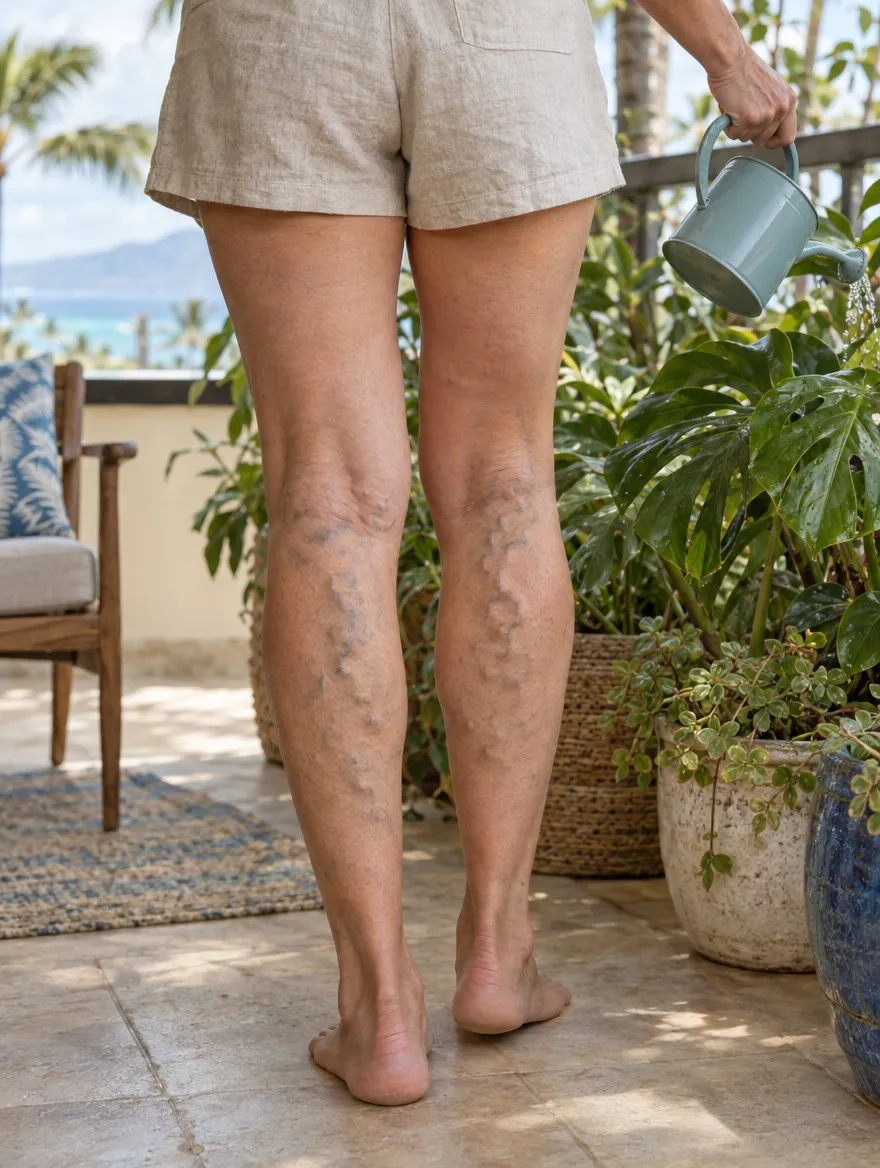
What are varicose veins?
Varicose veins are veins that have stretched and twisted because blood is pooling inside them. They usually show up on the calves, behind the knees, or along the inner thigh. About 1 in 3 adults has them.1
They happen when the one-way valves in your leg veins stop closing fully. Blood slips back down instead of moving up toward your heart, and the extra pressure makes the vein bulge. This is called venous reflux, and it’s the same problem behind chronic venous insufficiency.
Signs and symptoms
- Raised, rope-like veins that are blue or purple
- Aching, heavy, or tired legs, especially after standing
- Swelling around the ankles
- Itching, burning, or throbbing around a vein
- Cramping or restless legs at night
- Darkened skin near the ankle
Are varicose veins just cosmetic?
Often not. Varicose veins usually mean there’s a leak in the vein valves underneath, and vein disease tends to progress. In a 13-year study, almost 1 in 3 people with varicose veins developed skin changes from chronic venous insufficiency.2 When varicose veins cause symptoms, treatment is often covered by insurance.
Who gets them?
Varicose veins tend to run in families. They’re more common with age, during and after pregnancy, in people who stand or sit for long periods, and with extra weight.
How we find the cause
A painless duplex ultrasound in our office maps your leg veins and shows which valves are leaking. Dr. Yeo uses that map to plan treatment, so the problem is fixed at its source, not just on the surface.
Care that starts with listening
Every patient’s symptoms, goals, and vein anatomy are different. We will take time to explain what your ultrasound shows, discuss your treatment choices, and help you make an informed decision without pressure.
How varicose veins are treated
Treatment usually works in two parts: closing the leaking vein underneath, then clearing any bulging veins that remain near the surface.
| Treatment | What it does | Back to activity |
|---|---|---|
| VenaSeal | Seals a larger faulty vein with medical adhesive | Same day |
| ClosureFast | Closes a larger faulty vein with gentle heat | Same day |
| Varithena | Medicated microfoam closes veins, including twisted ones | Same day |
| Microphlebectomy | Removes bulging surface veins through tiny openings | 1–2 days |
| Ultrasound-guided Sclerotherapy | Ultrasound guides an injection that closes veins beneath the skin, including leftover varicose veins | Same day |
Watch a patient describe life after varicose vein treatment
Insurance
When varicose veins cause symptoms such as pain, heaviness, swelling, cramping, or skin changes, treatment may be considered medically necessary. Coverage depends on your plan and clinical findings. Plans usually look for symptoms that affect daily life and an ultrasound that shows reflux, and some ask you to try compression stockings first. We check your coverage before your visit. We accept most major plans, but not Kaiser or UHA. More about insurance.
Will they come back?
A treated vein stays closed. New veins can develop over time, because vein disease can be hereditary. Follow-up visits help catch changes early.
Sources
Keep reading
You might also want to read
Talk with our team of vein specialists about your leg symptoms and treatment options.
Leave your number and the best time to reach you. A member of our team will call you back to answer basic questions and help you understand the next step.
Call or text 808.538.1905 and experience thoughtful vein care, delivered with aloha.