
Conditions we treat
Leg swelling and skin changes from vein disease deserve caring attention
Puffy ankles, leg swelling, darkening skin, itching, or slow-healing sores can be signs of more advanced vein disease. Our Honolulu team can evaluate your circulation and help you understand what is happening.
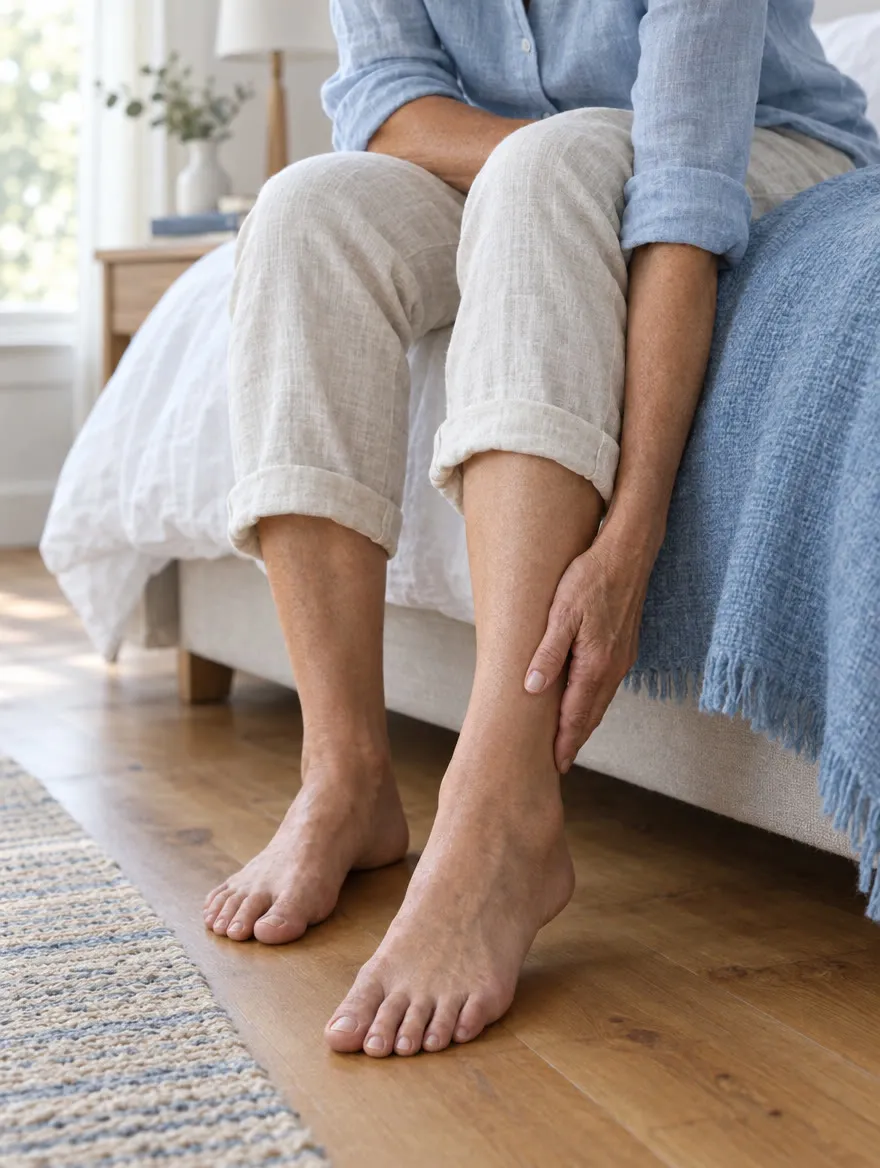
Swelling from vein disease
When the valves in your leg veins leak, blood and fluid collect in the lower legs. Vein-related swelling is usually:
- Worse at the end of the day or after standing or sitting for a long time
- Better in the morning or after raising your legs
- Most noticeable around the ankles, sometimes leaving sock marks
Skin changes to watch for
Long-term pressure in the veins can affect the skin, usually around the ankles and lower calves:
- Darkened skin: brownish or reddish discoloration.
- Itchy, red, or scaly skin (stasis dermatitis), which is sometimes mistaken for eczema.
- Hard, tight, or shiny skin (lipodermatosclerosis).
- Open sores that heal slowly (venous ulcers), often near the inner ankle.
Skin changes are a sign of more advanced vein disease. In a 13-year study, almost 1 in 3 people with varicose veins developed them.1
Venous leg ulcers
About 80% of leg ulcers are caused by vein problems.2 Wound care and compression are important, and treating the faulty vein helps too. In a 450-patient trial, treating the faulty vein early healed ulcers in a median of 56 days, versus 82 days when treatment was delayed.3 Treating the faulty vein has also been shown to cut ulcer recurrence at 12 months by more than half, compared with compression alone.2
Other causes of swelling
Not all leg swelling comes from veins. Heart, kidney, or liver conditions, lymphedema, some medications, and injuries can also cause it. Our ultrasound shows whether your veins are involved, and we’ll tell you if something else needs checking by your primary care provider.
Get urgent care for sudden swelling, pain, warmth, or redness in one leg, which can be signs of a blood clot. If you have an open sore, sudden worsening swelling, or significant pain, contact a medical professional promptly. For emergency symptoms such as chest pain or shortness of breath, call 911.
How we help
- A free vein screening call to talk through what you’re noticing and check whether your insurance covers treatment.
- Ultrasound in our office to see how blood flows in your leg veins.
- A treatment plan from Dr. Yeo, usually closing the faulty vein so blood reroutes through healthy veins. Compare treatments.
Sources
- Lee AJ et al. Progression of varicose veins and chronic venous insufficiency in the general population in the Edinburgh Vein Study. J Vasc Surg Venous Lymphat Disord. 2015;3(1):18–26.
- Collins L, Seraj S. Diagnosis and Treatment of Venous Ulcers. Am Fam Physician. 2010;81(8):989–996.
- Gohel MS et al. A Randomized Trial of Early Endovenous Ablation in Venous Ulceration (EVRA). N Engl J Med. 2018;378:2105–2114.
Keep reading
Next steps
Talk with our team of vein specialists about your leg symptoms and treatment options.
Leave your number and the best time to reach you. A member of our team will call you back to answer basic questions and help you understand the next step.
Call or text 808.538.1905 and experience thoughtful vein care, delivered with aloha.